I’ve been reading Emily Ratajkowski’s My Body during this holiday season. The holiday season in this part of the world is a time when joy, warmth, gathering, and care seem to be the expected emotional register. As I am reading Emily’s writing and thinking through it, I become more inclined to write about loneliness and the terror of the embodiment of my body. Ratajkowski lingers on the complicated life of a woman’s body, how desire, visibility, labor, and sexual power move through the female body and identity, unevenly; sometimes feeling like agency, sometimes like a violent extraction. Reading it now, I find myself hesitating over what it means to write about the body during a festive moment like now. Part of me wonders whether this is the time to speak about loneliness and the quiet terror that can accompany my embodiment, or whether I should lean instead toward the joy, freedom, and relief of inhabiting womanhood as I experience it at times.
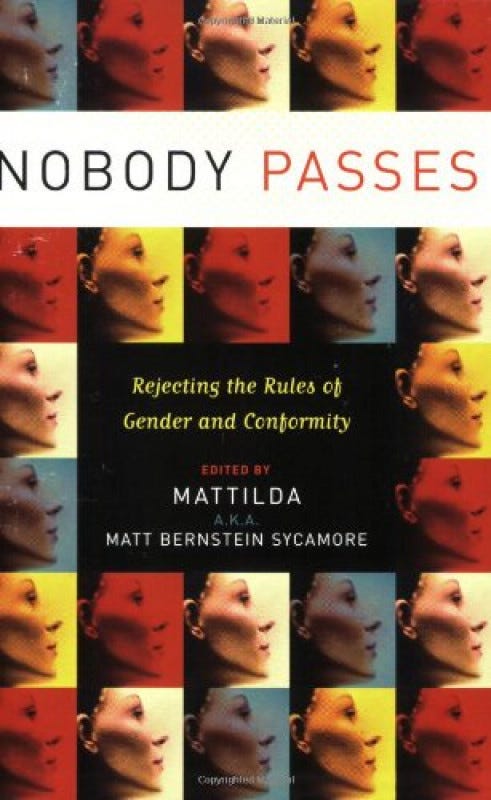
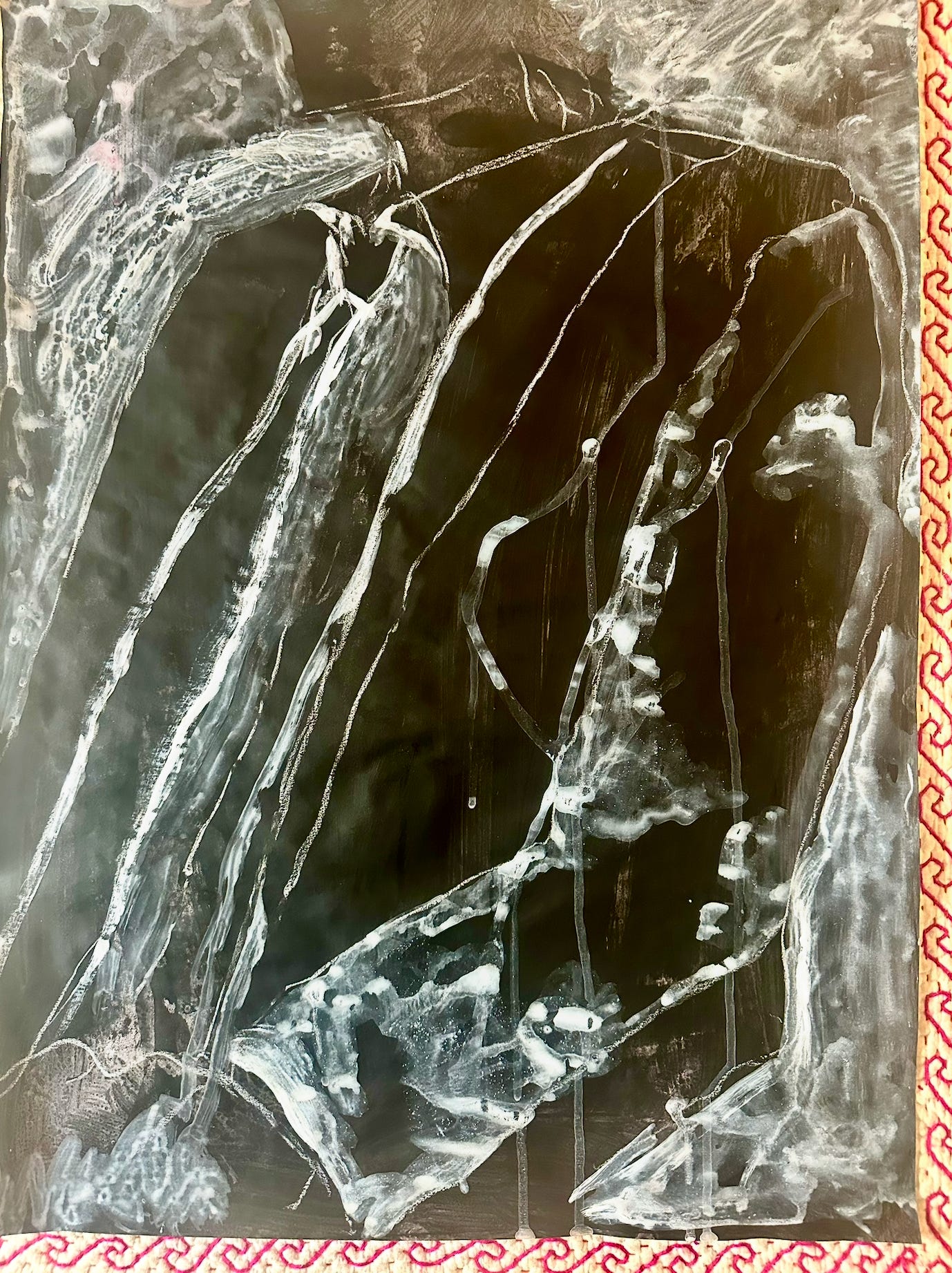
Portrait, December 2025 by Madeline Rosenberg
Emily writes about growing up inside a body that was always being watched, shaped, and interpreted as a woman’s body. My relationship to girlhood arrives from a different direction. As a trans feminine person, I wasn’t born into that knowledge, nor taught how to inhabit it early on. I entered womanhood later, learning its textures slowly, through looking, being looked at, desire, misrecognition, affirmation, and refusal. My body didn’t come with an inherited grammar; I’ve had to assemble one, piece by piece, often in public. Reading My Body has given me a language to think alongside rather than fully within. Emily’s experience doesn’t mirror mine, but it brushes against it in meaningful ways. It helps me think about how I define my body for myself, how I choose to present it, and how those choices feel once they leave me and enter the world. There is pleasure there, and a sense of freedom I don’t want to minimize. But there is also loneliness, a quiet vigilance, and moments of fearful terror, especially around being read, desired, or reduced in ways I can’t fully control.
~ ~ ~
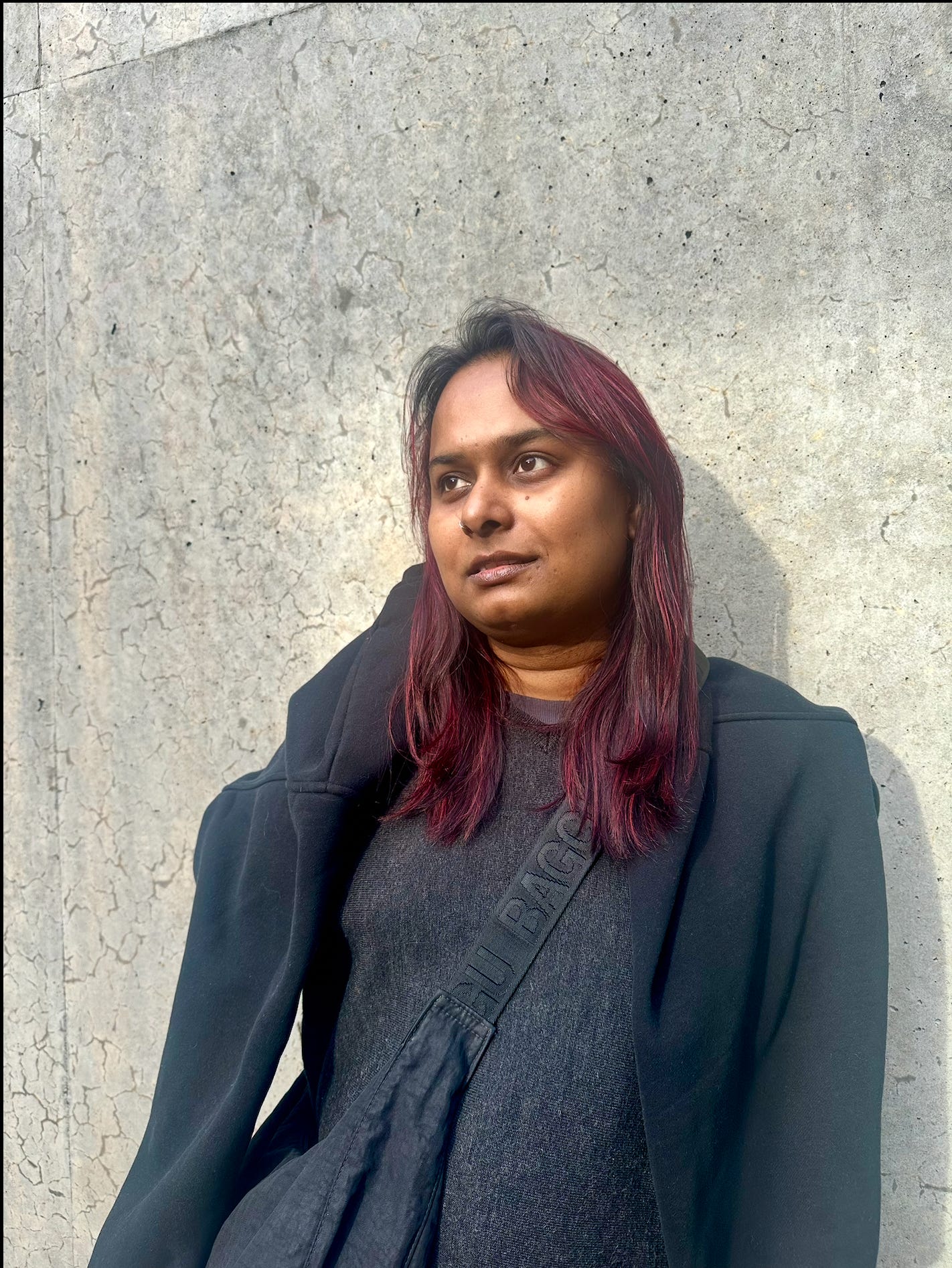
I have come to understand my body less as a stable object and more as a site of negotiation recently. A body that is always being translated, by culture, by class, by gendered expectation, by political fear. My body exists in a constant exchange with the world around it, absorbing projections about desirability, usefulness, legitimacy, and worth. It is not simply seen; it is evaluated. Not simply present; it is measured against an idea of what a body should achieve to be allowed in spaces. This understanding did not come from a single moment of clarity. It came from living inside a body that did not align with the social fantasy it was assigned at birth. Growing up in Bangladesh, my earliest relationship to gender was shaped not by choice, but by refusal. Masculinity was not offered to me as a possibility; it was imposed as a requirement. Femininity, meanwhile, was not imagined as an alternative but as a failure, something excessive, embarrassing, out of place. My body learned early that gender was not a spectrum but a border, and that crossing it carried consequences.
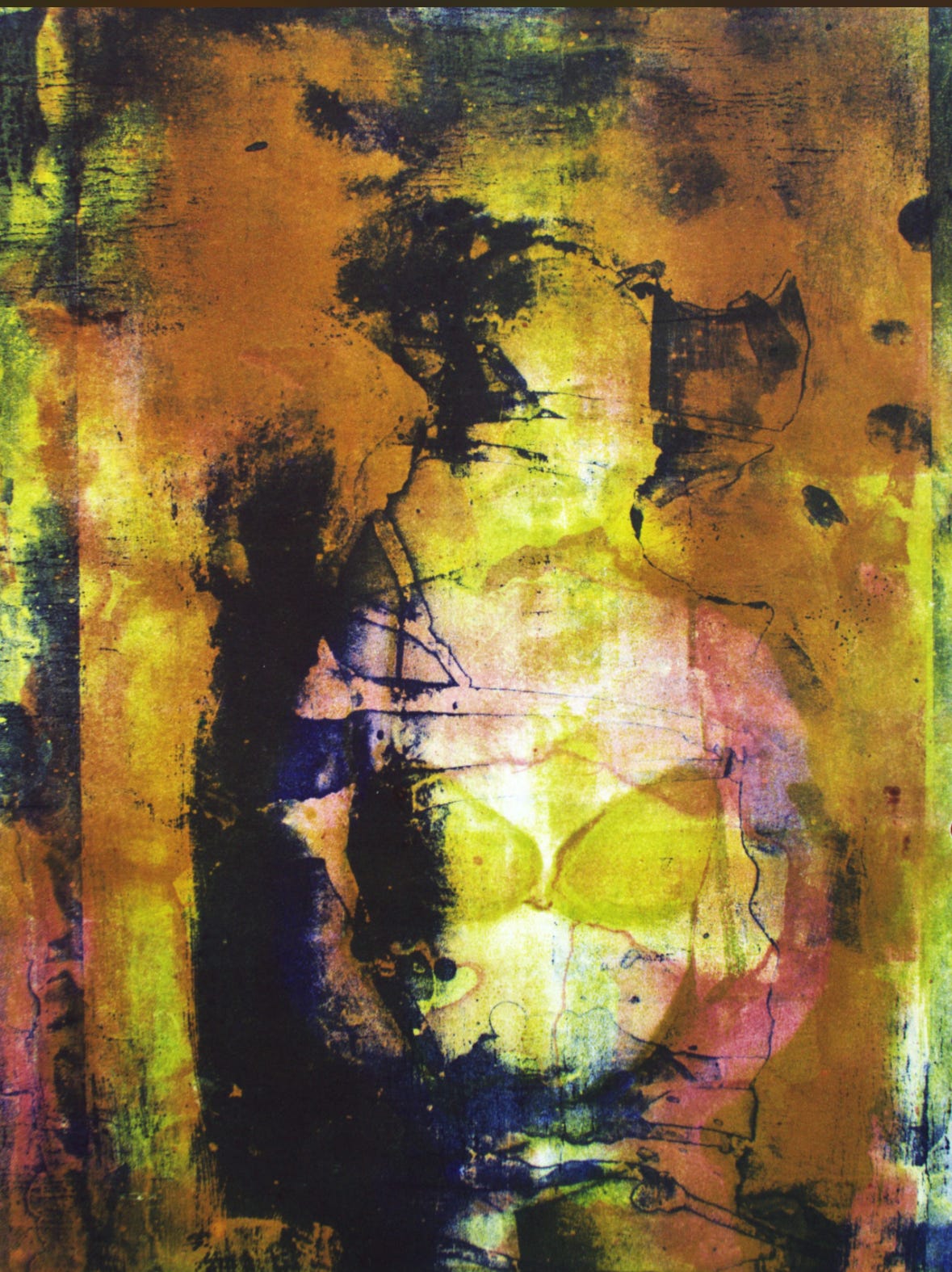
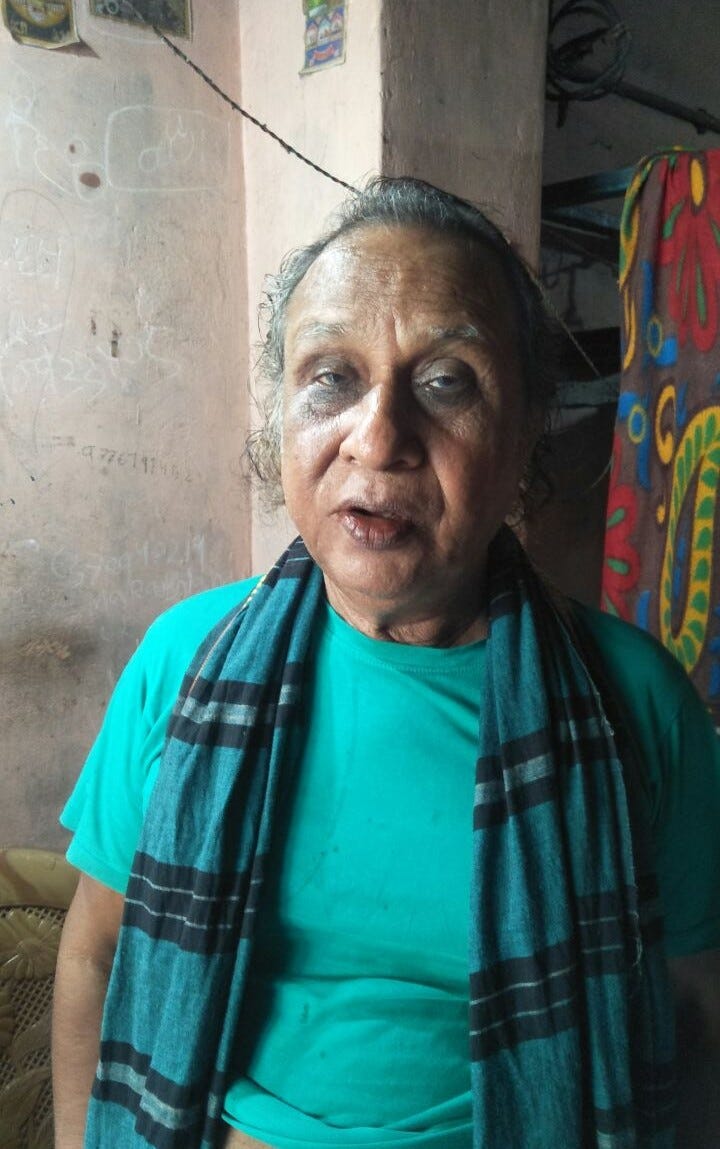
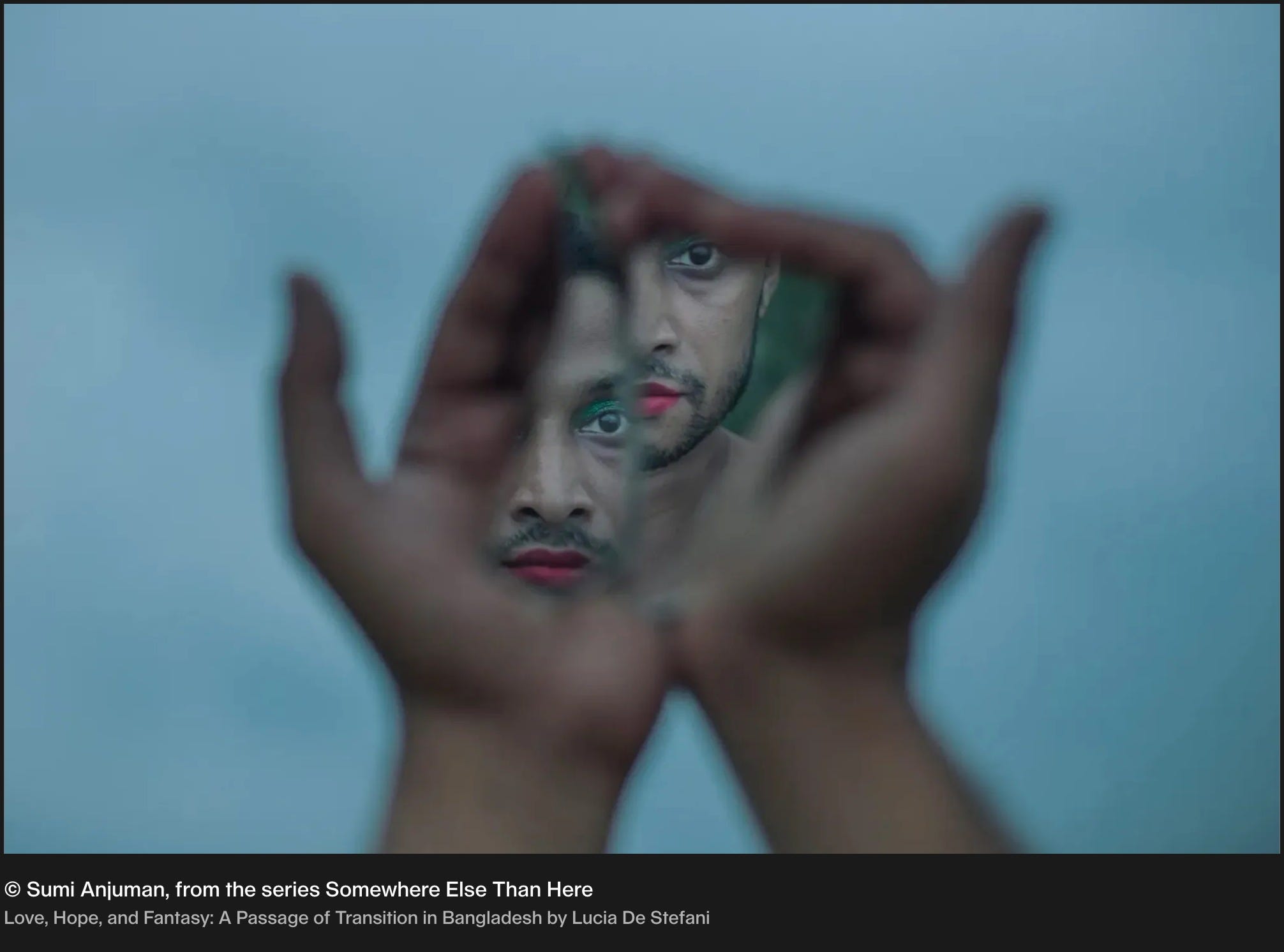
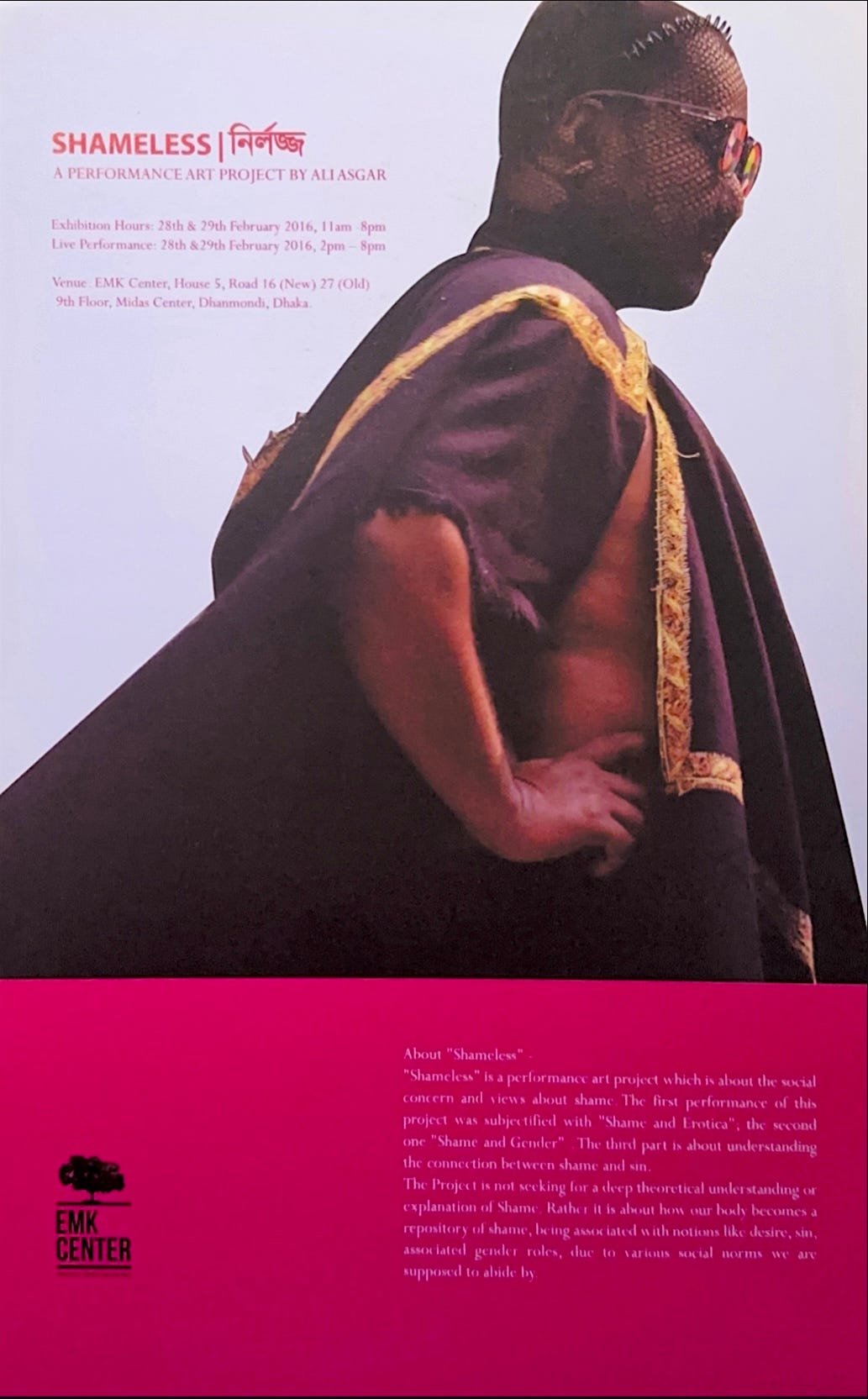
My Body, Lithography Print (Photo transfer on a polymer plate), Circa 2014
Before I had language for myself, there were already languages imposed on me. Terms like hijra, half-lady, maigga circulated as warnings as much as descriptions. Hijra was my first cultural reference to transness, not as identity, but as a social condition. A figure both inside and outside society. Recognized, excluded, ritualized, and stigmatized. Hijra identity in South Asia operates as a structure of belonging and dispossession at the same time: a lineage, a kinship system, a survival economy, overwhelmingly shaped by class and poverty. Hijras are visible, but that visibility is tightly managed. They are allowed presence without power, recognition without protection. For me, hijra was not a category I could simply step into. Class, education, money, and social mobility complicate that belonging. In Bangladesh, gender variance is never only about gender; it is about who is allowed to fail masculinity and still survive. Who is permitted femininity without being cast entirely outside the promise of a future? My body grew up in proximity to hijra existence, learning from it not certainty, but caution. Transness appeared to me first as something possible yet dangerous, sacred yet punished. A way of living outside heteropatriarchal success, but also a reminder of how violently society polices those who do.
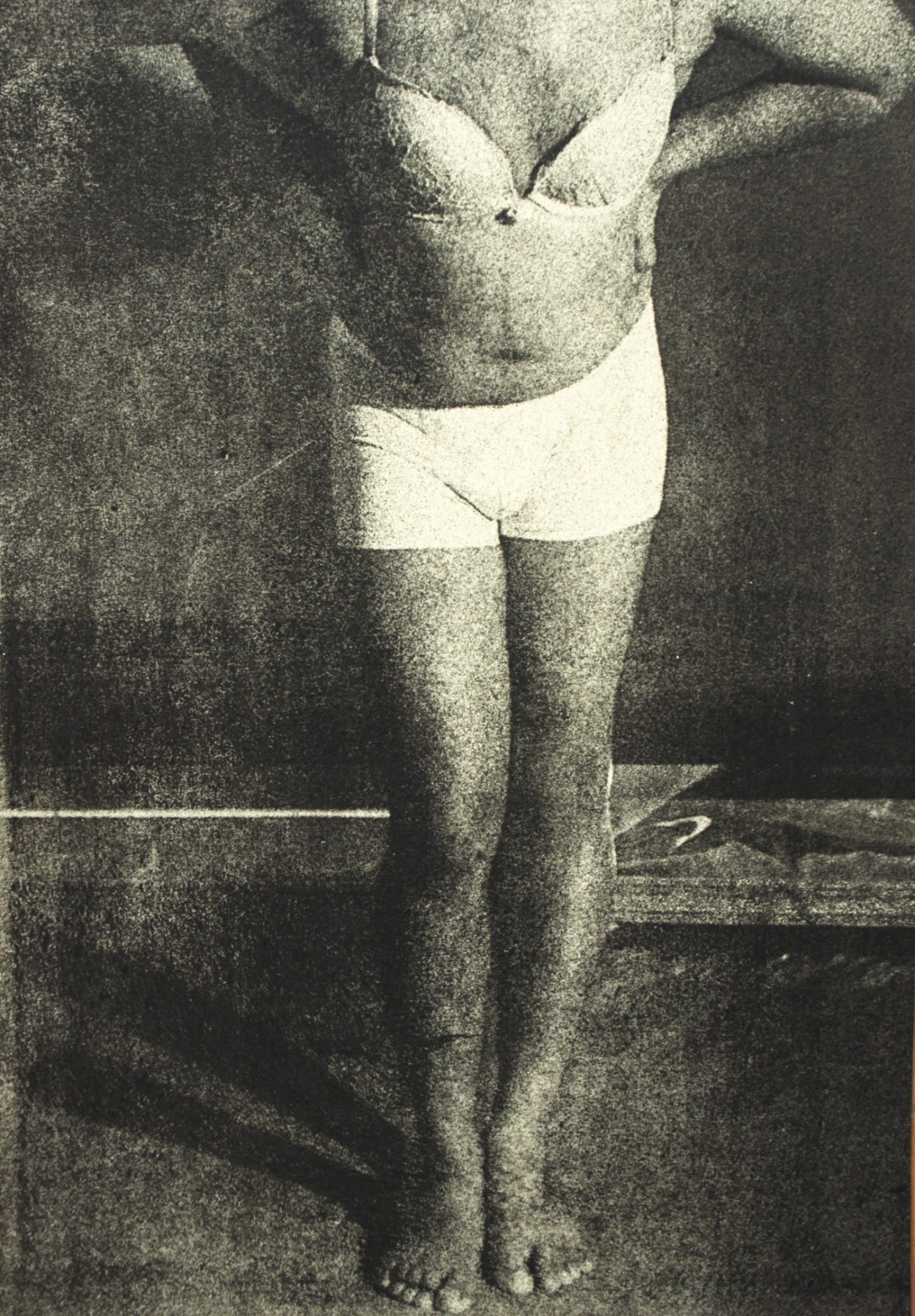
My Body, Multiplate Lithography Print (Photo transfer on a polymer plate), Circa 2014
In that sense, my transness did not arrive as self-realization. It arrived as a negotiation. A continuous assessment of risk, desire, class, and survival. What does it mean to inhabit femininity without inheriting its protections? What does success look like when gender itself is measured through productivity, marriage, reproduction, and respectability? My body did not fit those metrics. It still doesn’t. Instead, it moves through a different register; one shaped by refusal, improvisation, and care.
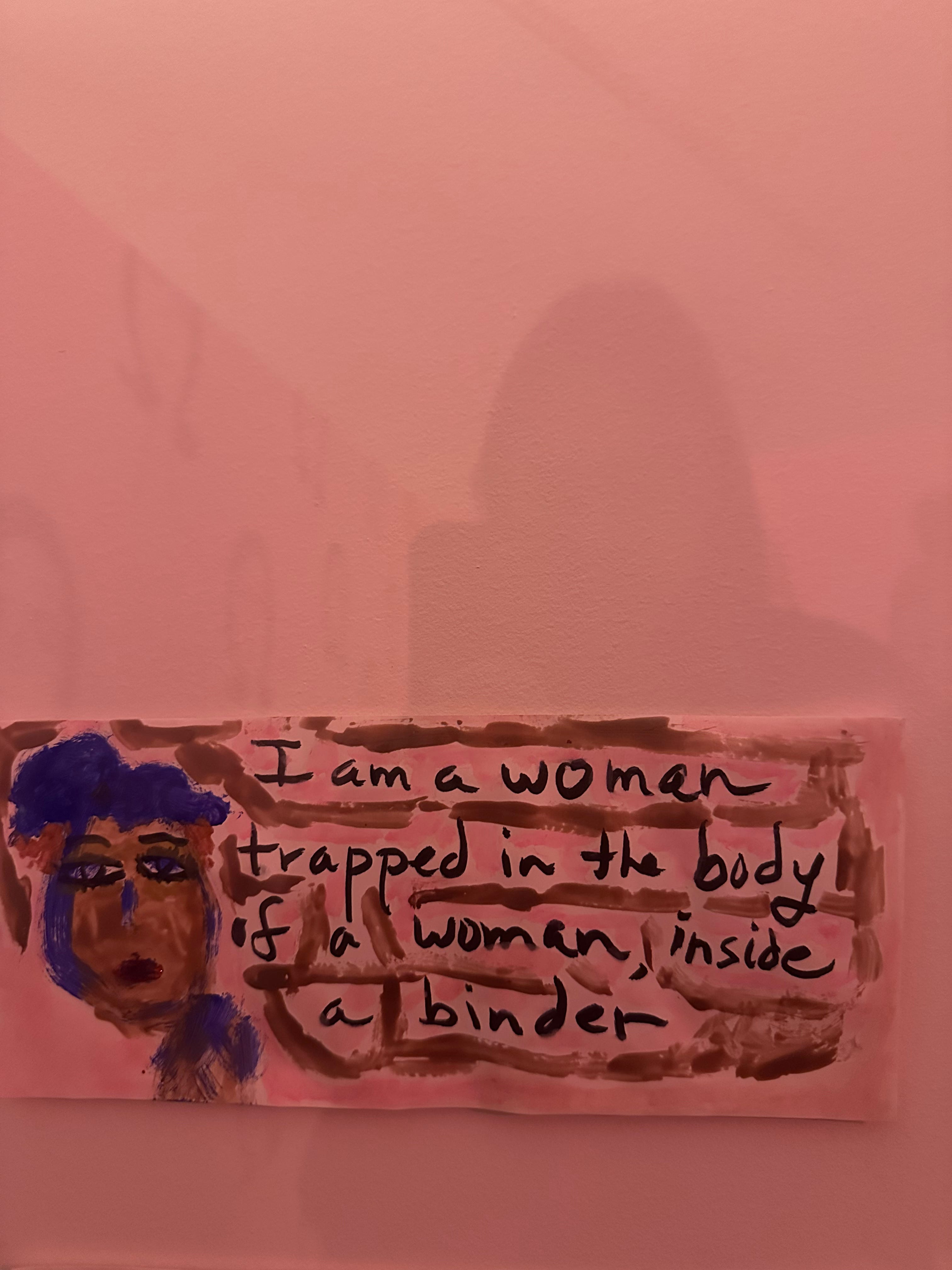
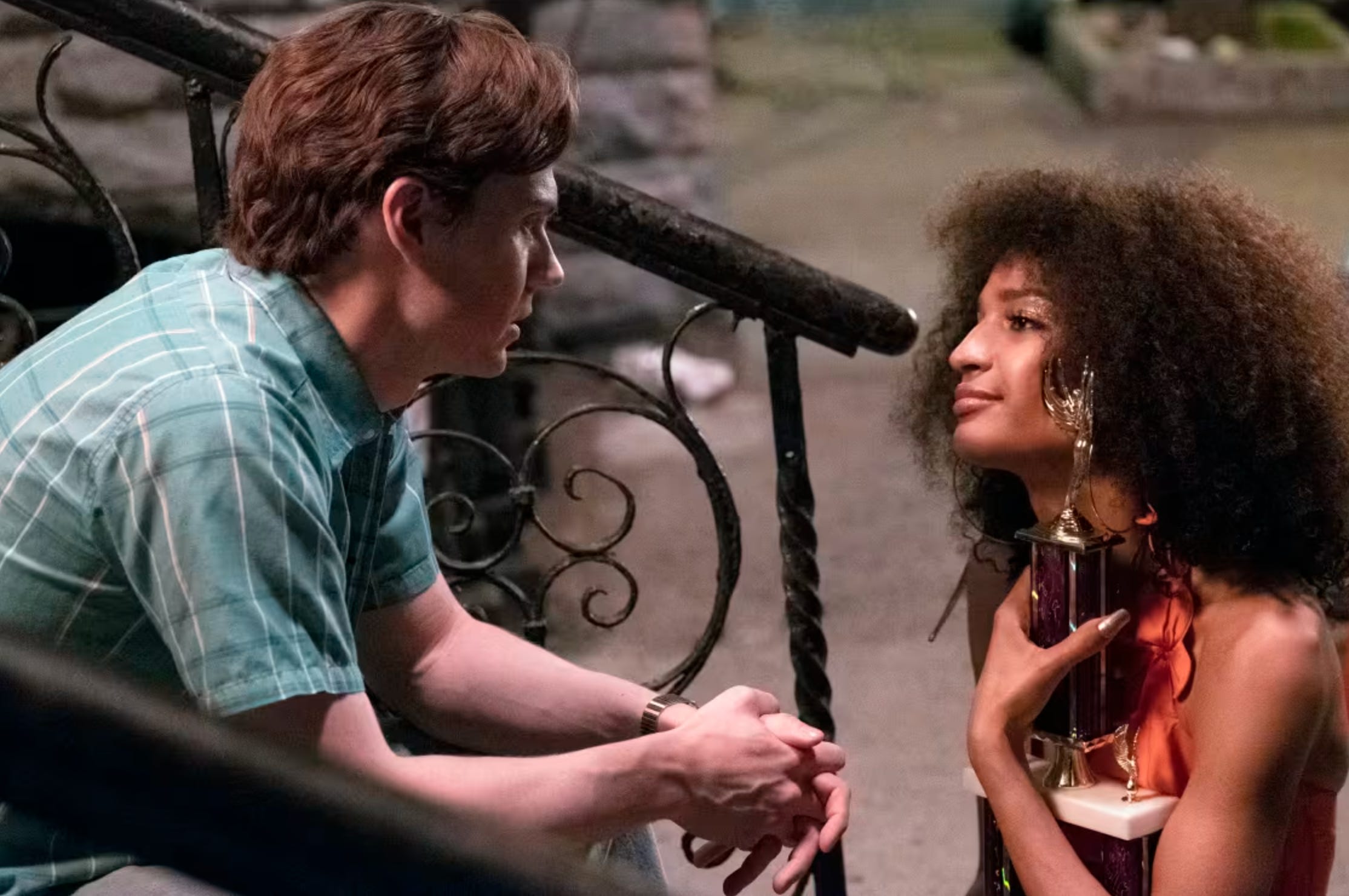
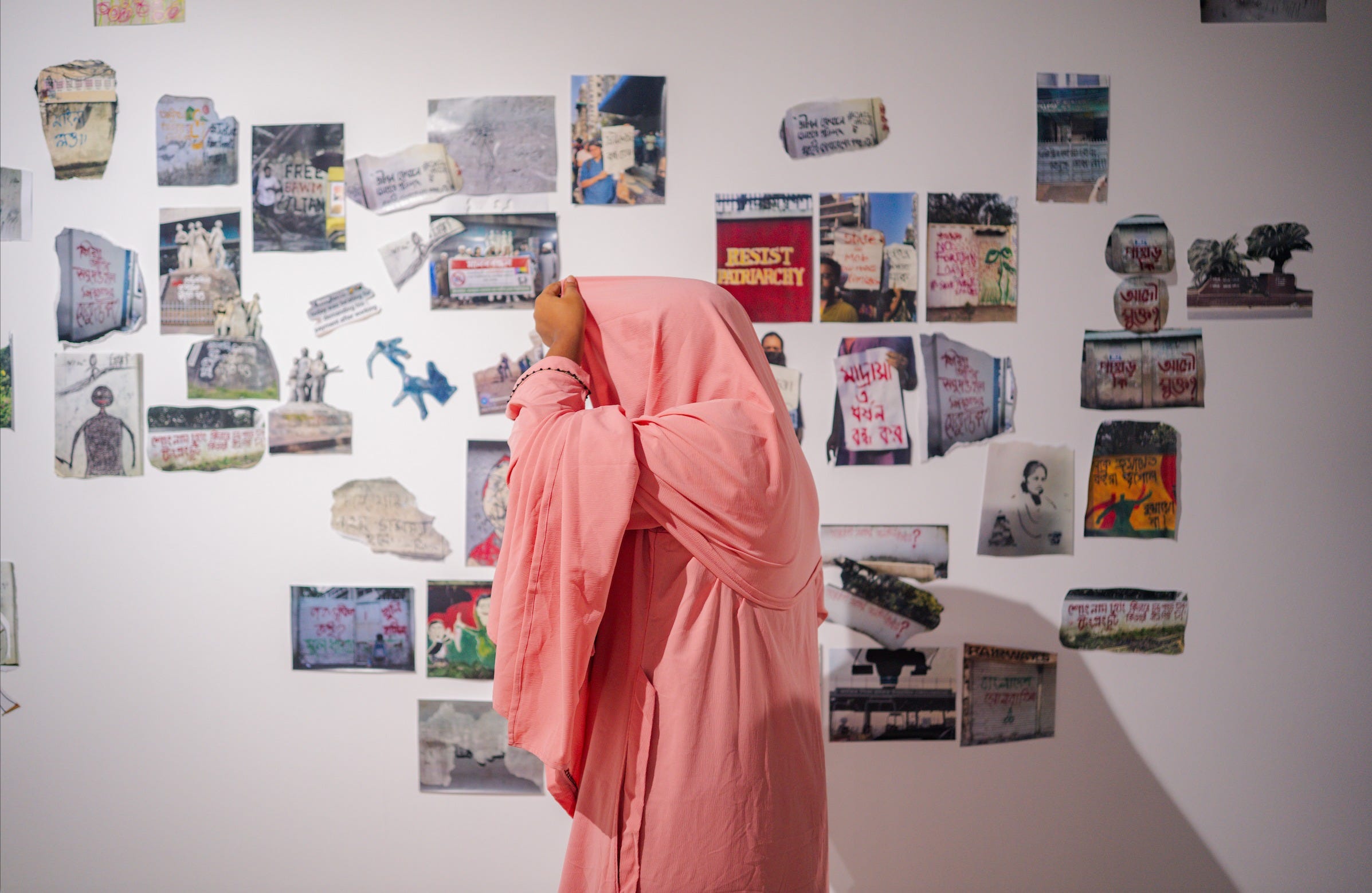
Vaginal Davis, Magnificent Product Exhibition at MOMA PS1, December 2025
~ ~ ~
Loneliness, for me, is not the absence of people. It is the experience of carrying something that does not translate easily. A kind of weight that moves with me. The fatigue of explanation. The repetition of context. The quiet awareness that even in company, even in conversation, there are parts of my life that remain unshareable, not because others don’t care, but because the language is unfinished. We often imagine loneliness as being cut off. I experience it more as being partially legible. To live as trans, transfeminine, immigrant, refugee, artist, working-class, shaped by displacement and by what does not settle, is to move through overlapping systems that don’t quite line up. Each has its own grammar. Living at their crossings produces something messier, more specific, harder to hold together. This is the loneliness of constant translation: of moving between idioms, of watching people try to place you with the tools they have, knowing those tools are never enough. Even recognition can feel lonely when it arrives through approximation.
There is also a kind of relief in accepting that my life will not be fully mirrored. That my body does not need agreement to be real. Loneliness, then, becomes less a lack than a boundary, a way of protecting my will, my body, my spirit. It lets me step outside the demand to be understood on someone else’s terms, and reach instead for something practiced quietly, something closer to divinity, something lived rather than granted.
Joler Gan, Dure Thaka Megh from the album Otol Joler Gan
I kept listening to an old song by the Bangladeshi Band Joler Gan (Song of Water) Dure Thaka Megh (The Cloud That Stays Distant) in all Christmas morning. The cloud that stays at a distance. The cloud that is asked to hold itself together, as much as it can. In the song, the cloud feels like a body, hovering, present, never fully reachable. It is a metaphor for the kind of loneliness that does not come from isolation, but from being suspended between worlds. The body as cloud. The body as divine. The body as portal.
“Clouds that stay far away, stay a little farther still -
hold yourself together, as much as you can.
The mind is a boat that has lost its sail,
no matter how far it drifts, it still belongs to you.
How much is “everything”? Just a speck,
when all words are finished, one truth remains.
In sleepless nights, we must face it -
you, me, all of us, held in one another’s hands.
Still, clouds, stay far away,
when the spring wind comes, hold yourself steady”
— Loosely translated from the original Bangla lyrics by Shaon Akond, “Dure Thaka Megh” (Joler Gan).
The trans body is asked constantly to explain itself, to arrive somewhere legible, to settle into an agreed-upon form. But transness resists arrival. It is a process, a weather pattern, a state of becoming. The song’s line about the heart as a sail-less boat feels especially close: drifting without a prescribed route, carried by currents rather than control. And yet, no matter how far it travels, it remains whole. My trans body is like that, moving without inheritance, without a map, still belonging to itself. Its wholeness does not depend on recognition.
I see the cloud as a portal, open to light, to movement, to change ; but it is also asked to protect itself, even when the winds soften, even when abundance arrives. That feels deeply trans to me. The trans body opens a different way of sensing, loving, and being in the world, but it does so at a distance from what the world expects bodies to be. It is a portal that does not promise arrival, only passage. And there is a profound loneliness in that: to live at the threshold, to move between worlds without fully settling into any of them. Still, the song insists that this distance is not failure. It is a form of staying intact. A quiet divinity.
As the poet Charles Baudelaire once loved clouds for their light and restlessness.
“Then, what do you love, extraordinary stranger? I love the clouds the clouds that pass up there, Up there the wonderful clouds!”
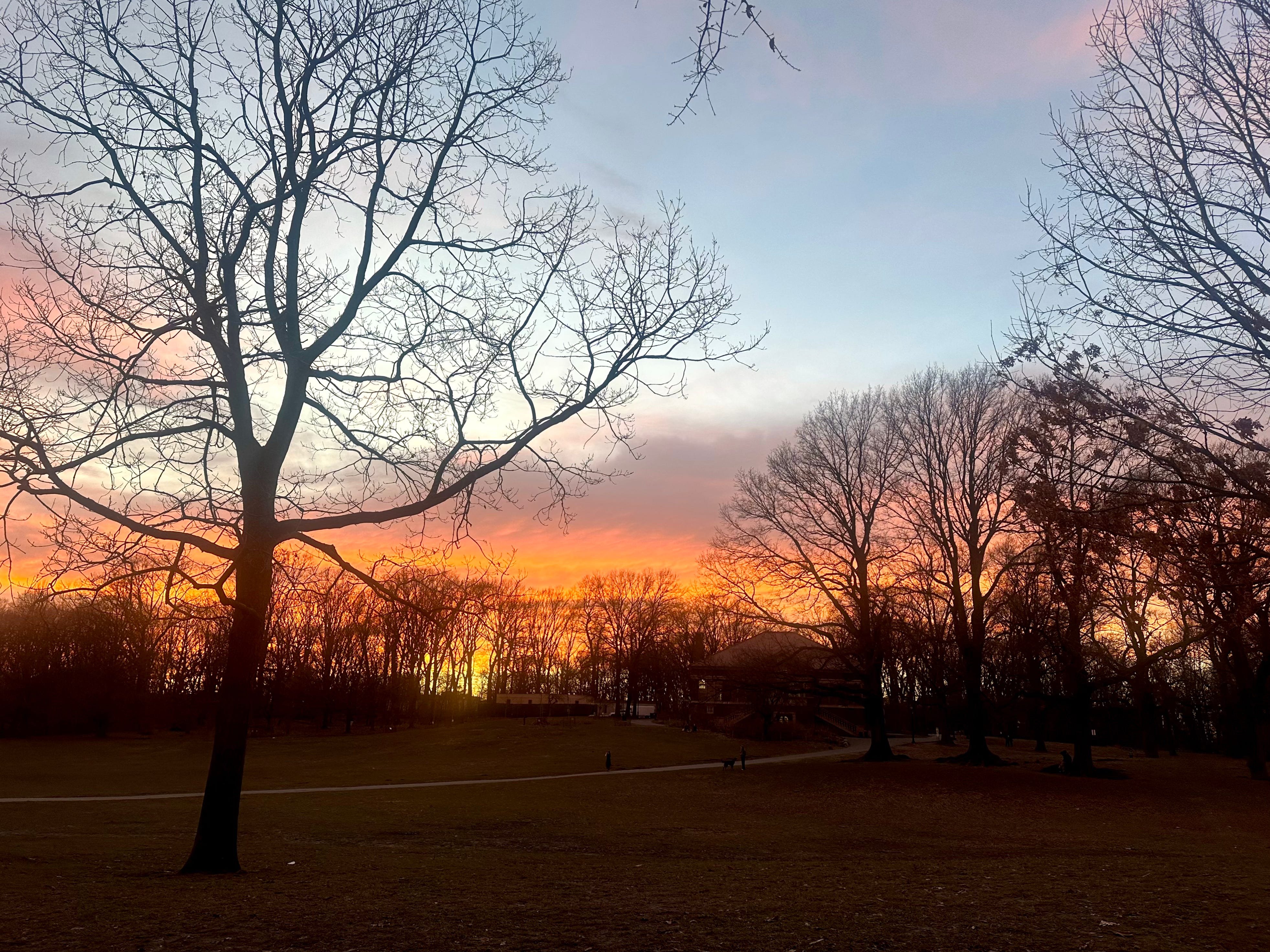
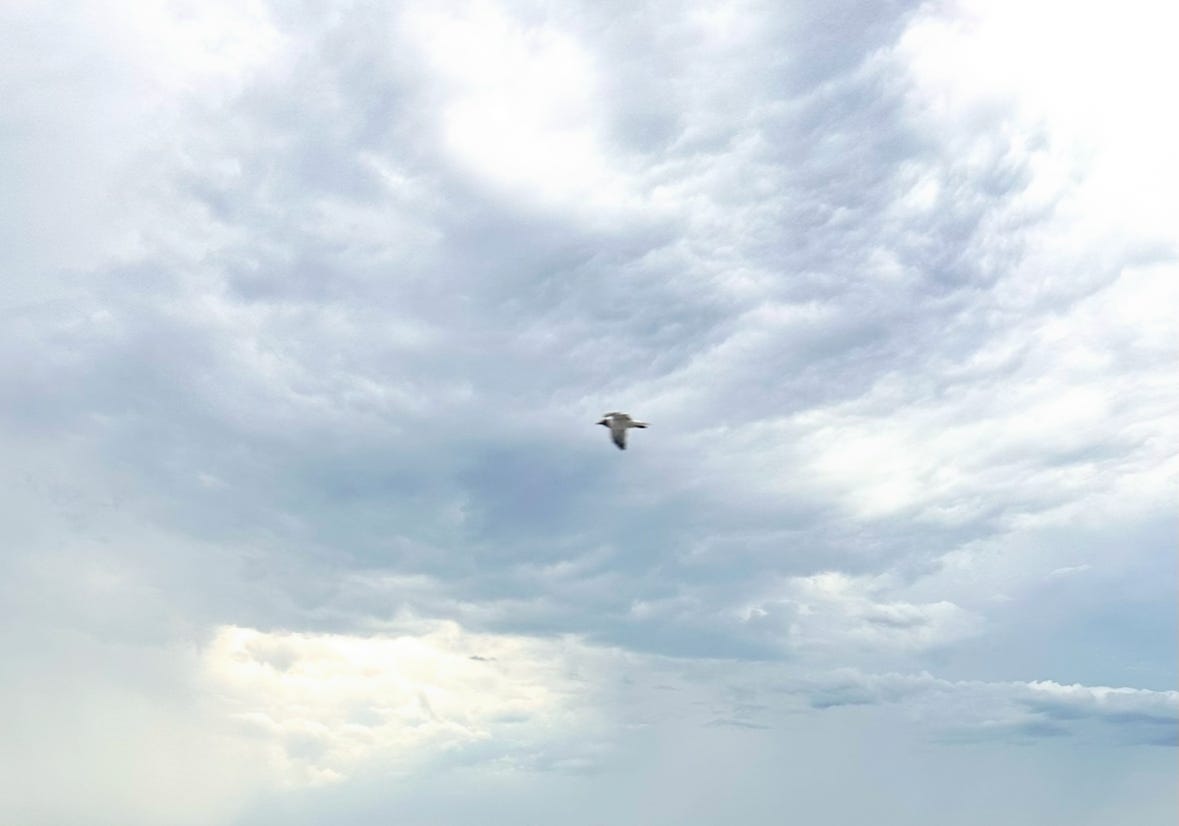
Clouds, Rokaway Beach, June 2025
~ ~ ~
The terror of being my kind does not only come from the state, from strangers, or from the abstract idea of violence. It also comes from intimacy. From closeness. From being in community.
I think of two friends of mine, fictional names, but real lives, Seema and Anjali. We come from different sides of the Bangladesh-India border, from different class positions, different family histories, different routes of arrival into transness. What brought us together was not shared upbringing or shared politics, but something more fragile and more specific: we are all trans, and we speak the same language. We learned to recognize ourselves through one another. We learned transness not as a fixed identity, but as something negotiated in real time, in conversation, in observation, in comparison. In cities like Dhaka, and later in New York, our transness was not something we simply had. It was something we had to figure out. We watched how each other moved through the world, how we dressed, how we spoke, how we explained ourselves to men, to institutions, to friends. We paid attention to which kinds of femininity were rewarded, which kinds were punished, which kinds were ignored altogether. We learned what passed, what failed, what attracted protection, what invited ridicule. Our bond was formed through this shared labor of deciphering the script.
Love was part of this education. So was longing. So was competition. There were moments when we wanted the same man, or different versions of the same promise. It was never just about the man. It was about what his desire offered: legibility, validation, the sense that our bodies could be read as successful within a cis-heteropatriarchal imagination. When one of us was chosen, the others felt it not only as personal loss, but as displacement. Desire moved like capital, unevenly, unpredictably, concentrating value in one place and withdrawing it from another.
This is something trans communities rarely want to admit, especially when resources are scarce. Under conditions of precarity, desirability becomes currency. Passing becomes leverage. Visibility becomes power. And power, when unevenly distributed, generates fear.
Recently, I reconnected with Anjali after a break. She is now in a relationship with someone who was once Seema’s partner. It would be easy to narrate this as betrayal or rivalry, but that would be too shallow. What circulated between them was not ownership of a man, but ownership of a certain legibility, the same legibility that once affirmed Seema, now finding a new home. Watching that shift is destabilizing. It forces questions none of us want to answer: What happens when recognition moves on? What happens when the thing that once made you visible now confirms someone else?
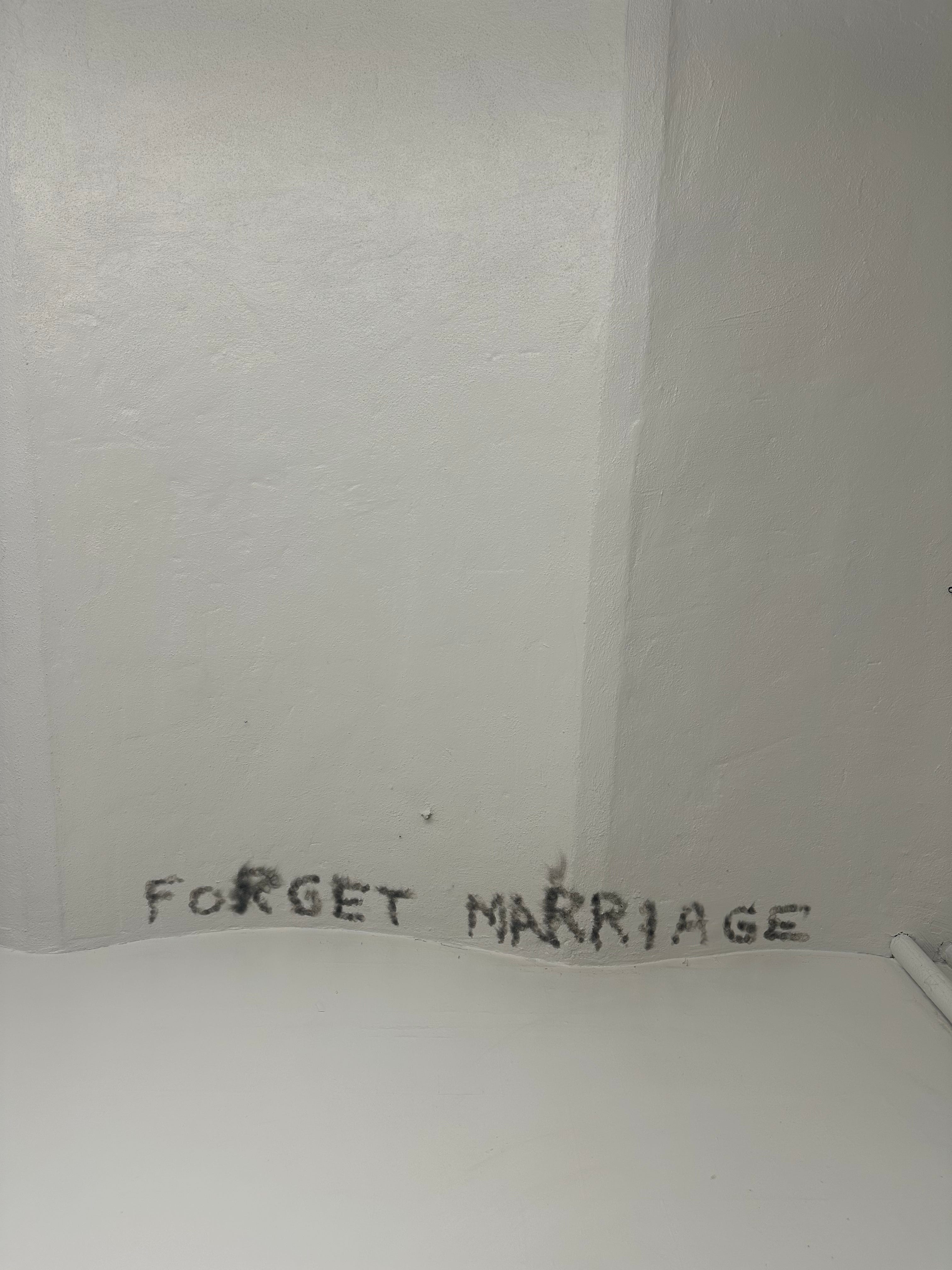
Whitney Clafling, Forget Marriage, Soot on Celling, MOMA PS1 Bathroom
When I spoke to Seema a few days ago, she sounded exhausted. She told me she no longer wants to be part of queer community. Not because she rejects transness, but because she is tired of being constantly read, assessed, measured. Tired of being told,implicitly or explicitly, whether she is trans enough, visible enough, relevant enough. She spoke about how the very spaces that once helped her articulate her transness now feel hostile. Not loudly violent, but quietly corrosive. Competitive. Territorial. Obsessed with visibility, success, and hierarchy. Her refusal stayed with me.
Seema was not refusing community itself. She was refusing a particular economy of community, one where legibility is mistaken for liberation, where visibility is equated with success, and success with capital. In a city like New York, where trans narratives proliferate, where platforms multiply, where institutions are eager to showcase diversity, this economy becomes especially intense. Voices rise not only because they speak truth, but because they already know how to speak in ways that are rewarded. Visibility today is rarely neutral. It moves through grants, panels, curated conversations, fashionable aesthetics, recognizable language. Certain trans voices emerge because they are fluent in these circuits. They know how to narrate their lives in ways institutions can digest. They know how to translate pain into something legible, inspirational, fundable. Their success then becomes evidence of legitimacy.
For trans people coming from places like Bangladesh, or from South Asian diasporic communities more broadly, this creates a brutal sorting mechanism. Suddenly there is a “right” kind of trans representation and a “wrong” one. The right kind is articulate, polished, culturally fluent, often upper-caste and upper-class, often already holding safety nets. The wrong kind is messy, angry, economically unstable, insufficiently refined, too foreign, too loud, too much.This distinction does not only determine who gets platforms. It determines who is believed, who is protected, who is allowed to rest.
What is most terrifying is that this logic does not come only from outside. It is reproduced inside our own communities. The same heteropatriarchal system that taught us there is only room for one version of success now trains us to enforce that scarcity on one another. Categories multiply. Hierarchies harden. Worth becomes something to defend rather than share.
I see this most clearly in smaller diasporic spaces.South Asian, Bangladeshi, where access is limited and heavily guarded. These communities are intimate and fragile. They are also deeply territorial. Doors are held tightly. Recognition circulates among those already inside. People clap for one another in echo chambers, hoping that proximity to white institutions will secure their place at the table, rather than extending a hand to those still outside.This is the terror of being my kind in this city.
Not only that the world does not know how to hold us, but that sometimes, neither do we. Between Seema, Anjali, and me, we occupy very different positions on the spectrum of trans legibility. Anjali moves with less visibility. Seema carries more clout, more validation. I sit elsewhere, shaped by my own politics, my own refusals, my own constraints. And yet, what we want is remarkably simple: safety. A sense of ease. A life that can move beyond constant survival.
Community, when organized around competition, visibility, and success, makes that nearly impossible. It turns care into currency. It turns difference into threat. It asks us to perform instead of breathe. And yet, I don’t want to abandon the idea of transness as world-making. Because transness, at its core, is not about arriving at a perfect form. It is about building a livable world where one did not previously exist. World-making requires patience, redistribution, and a willingness to remain unfinished. It asks us not only how we appear to outsiders, but how we treat one another when no one is watching.
Before demanding recognition from society, there is a question the trans/ south asian diaspora must ask itself: What kind of world are we actually building for our own?
This question terrifies me precisely because it has no easy answer. But it is the only one worth staying with. Because refusing one another would mean accepting a future built entirely on scarcity. And I am not willing to believe that is the only horizon available to us.
“The mind, the mind, how many things it says.
Hearing its words, someone leaps into the water.
A happiness-bird flies in and settles close,
the happiness-bird sings, does anyone hear its song?”
— Loosely translated from the original Bangla lyrics by Shaon Akond, “Dure Thaka Megh” (Joler Gan).
~ ~ ~
I started this Substack seven months ago out of paranoia, if I’m honest. A paranoia shaped by uncertainty, about immigration, work, safety, belonging, and the larger direction of my life. Uncertainty is not an occasional condition for me; it is a daily passenger. Writing became a way to stay oriented when nothing else felt stable.
Over this year, I have been surprised by how this space has opened into connection. People read. People unsubscribed. People got angry. People felt moved. Some were glad to see me writing, producing, thinking out loud. I am grateful for all of it, the friction, the care, the disagreement, the quiet recognition. I am grateful for having a space where I can articulate my thoughts beyond social media, beyond glitter and glimmers, beyond the constant performance of success. This Substack has become a place where thinking can linger, where uncertainty does not need to be resolved immediately, and where connection can happen without spectacle. For that, and for everyone who has encountered this work in whatever way they could, I remain deeply thankful.